How to convert PNG images to PDF
Put screenshots, diagrams and logos into a PDF — and what really happens to a transparent PNG on the way in.
A PNG is usually a picture of something that was never a photograph. A screenshot. A chart. A wiring diagram. A logo. A signature scanned onto a transparent background. Those are precisely the images JPEG handles worst, and precisely the images people most often need to hand someone as a PDF. That is why this is its own tool rather than a checkbox on the JPG one.
Convert PNG images to PDF
Add your PNGs
Drop them in or browse for them. The count and total size appear underneath as you go.
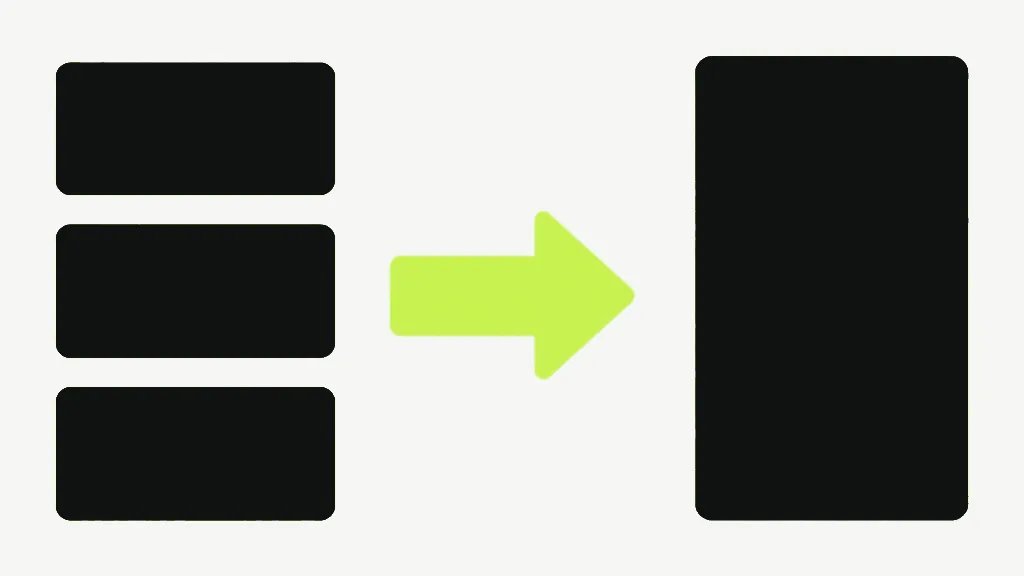
Put them in order
Drag the rows by the grip handle. Pages follow the list exactly, top to bottom.
Choose a page size
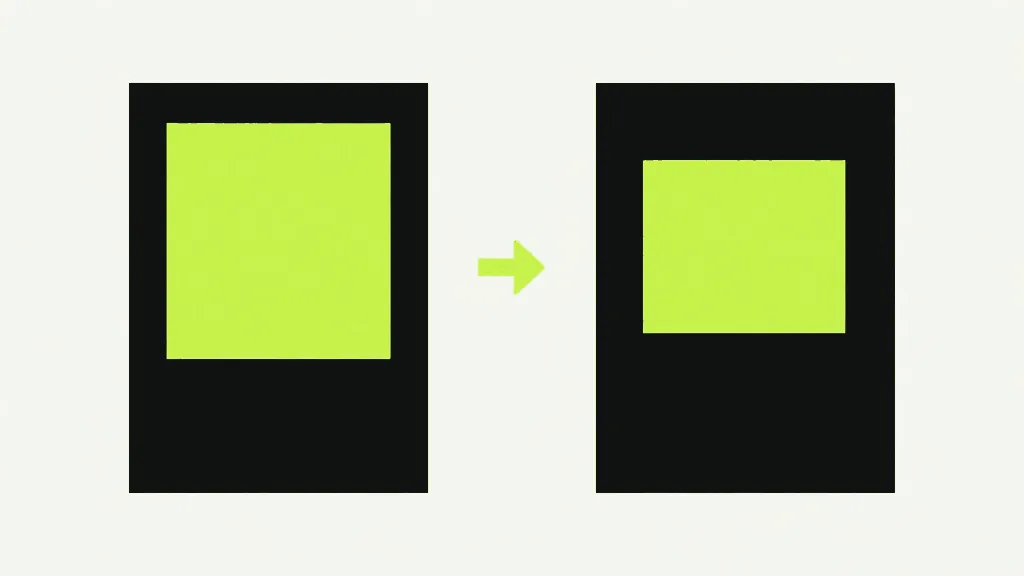
Fit to image, A4 or Letter. A4 and Letter add a portrait/landscape control.
Create PDF
Click Create PDF. One image per page, built on your device, downloaded immediately.
Transparency survives. It just does not look like it.
This is the question everyone asks about this tool, and the common answer — including the one this page used to give — is wrong. Transparency is not lost. It never was.
When a PNG carrying an alpha channel is embedded, the alpha is carried into the PDF as a soft mask — an /SMask, in the format's own vocabulary — attached to the image. It is a separate greyscale image whose values tell the viewer how much of each pixel to paint. The transparency is not flattened, not filled with white, not discarded. It is sitting in your file.
We checked rather than assumed, which is the only reason this paragraph is the right way round. Seven PNG variants went through the real conversion path: plain 8-bit RGBA, an interlaced one, a palette-based one with a tRNS chunk, greyscale-plus-alpha, 16-bit, and a maximum-compression re-encode. Every one of them produced a soft mask in the output. The control — the same image with a fully opaque alpha channel — produced none, which is how we know the test was measuring something real rather than agreeing with us.
So why does it look white?
Because your PDF viewer paints the page white before it draws anything onto it. That is what a page is: a sheet. Transparent pixels let the sheet show through, and the sheet is white, so on screen transparency is rendered as white and looks identical to white paint. You cannot tell them apart by looking, which is exactly why people conclude the transparency was thrown away.
The difference shows itself the moment the page stops being white. Print it on coloured stock and the colour comes up through the transparent regions instead of being blocked by a white rectangle. Stamp the image over other content — a logo over a photograph, a signature over a contract line — and what is underneath shows through. Open the file in an editor that displays a transparency grid and there it is, checkerboard and all.
The practical consequence is a decision, not a bug. If you want transparent regions to be a specific colour rather than "whatever happens to be behind them", flatten the background in your image editor before you convert. This tool will not guess for you, and that is deliberate: guessing white is the behaviour that silently ruins a logo the day someone puts it on a dark slide, and by then the original is three weeks gone.

Lossless is the other half of the point
PNG compression throws nothing away. Your pixels go into the PDF and come back out as the same pixels — the encoding inside the file changes, the image does not. That is the whole reason to reach for this tool instead of the JPG one, and it matters far more than most people expect.
JPEG is built for photographs: smooth gradients, no hard edges, detail the eye cannot audit. It is genuinely excellent at them. Point it at a screenshot and every one of those assumptions inverts. Crisp black text on white picks up grey mosquito noise around each letter. A one-pixel table rule turns to mush. A flat region of brand colour develops faint blocky texture. None of it is fixable afterwards, and all of it is visible the moment someone zooms in — which, on a diagram, is the first thing they do.
- Screenshots, UI captures, terminal output → PNG. Text in an image stays legible.
- Charts, diagrams, line art, QR codes → PNG. Thin lines stay thin and a QR code still scans.
- Logos and signatures with transparent backgrounds → PNG, and the transparency comes with them.
- Photographs → JPG to PDF instead. A photo stored as PNG is an enormous file for no visible gain.
Page size, briefly
One image per page, in the order you drag the rows into. Fit to image gives each page the dimensions of its own image; A4 or Letter gives every page the same size with the image centred inside a 24-point margin and its aspect ratio untouched. The arithmetic — and the surprise buried in it, which is that Fit to image can hand you a page the size of a poster — is covered in How to convert JPG images to PDF. The sizing code is shared between the two tools, so every word of it applies here.
What this tool does not do
- It accepts PNGs only. There is no mixing PNGs and JPGs in one pass — convert one set, convert the other, then merge the two PDFs.
- It will not resample, resize or compress your images. A 4000-pixel-wide screenshot goes in at 4000 pixels wide, and the PDF is as large as that implies.
- It does not read the images for text. The result is a picture of your screenshot, not a searchable document — no OCR happens here or anywhere else on this site.
Your images are read and the PDF is assembled inside your browser. Nothing is uploaded, which for a folder of screenshots of internal dashboards is not a small detail.