How to edit a PDF in Adobe Acrobat — and free, without it
In Adobe Acrobat, edit text by selecting Edit on the top bar and clicking the text to retype it — a paid Pro or Standard feature. Acrobat rewrites the words themselves; free browser tools lay a layer on top instead.
There are two completely different things people mean by "edit a PDF in Adobe Acrobat," and Acrobat does one of them in a way nothing free quite matches — and charges for the privilege. Rewriting the words already printed on the page is the real, hard trick, and it is a paid feature. Adding to the page — a highlight, an arrow, a line of text, a signature — is the easy one, and you do not need Acrobat for it at all. Here is where each lives, and how to do the second free in your browser.
How do I edit a PDF in Adobe Acrobat?
In current Acrobat, select Edit on the top bar, then click the text you want to change and retype it, or select an image to move or replace it. Acrobat genuinely rewrites the words in place — it is one of the few tools that reflows real text rather than covering it — and full text editing needs paid Acrobat Pro or Standard, not the free Reader.
That reflow is the thing worth paying attention to. When Acrobat lets you delete a word and the line closes up behind it, it has reconstructed the paragraph — a genuinely hard job, because a PDF does not store paragraphs, only glyphs pinned at fixed coordinates. It is impressive, it is occasionally wrong on complex layouts, and it is behind the subscription. Everything else people call "editing" is lighter than this and does not need it.
Why can I no longer edit my PDF in Adobe?
Almost always because you have Adobe Reader, not Acrobat. Reader is a viewer — it opens and prints PDFs and lets you fill some forms, but it does not edit the text of a document. Editing text is an Acrobat Pro or Standard feature, so a lapsed subscription or a Reader-only install removes the option that was there before.
This is the wall that sends most people looking for an alternative. Reader will happily let you add comments and markup, but the moment you try to retype the printed text it stops, because that capability was never in the free tier. The good news is that the markup half — the part Reader half-does and Acrobat charges to extend — is exactly what a browser can do for free.
How do I edit a PDF without Adobe Acrobat, for free?
For everything short of rewriting the original text — highlighting, drawing, adding a text box, boxing a figure — open Annotate PDF in your browser. Pick a tool and a colour, mark the page, and save a copy. It runs entirely on your device, so nothing is uploaded and there is no account to make.
Open the tool
Open Annotate PDF. It is an ordinary web page — nothing to install, no sign-in.
Choose the PDF
Drop in your file. Every page is rendered on your device first, so a long document takes a moment before the toolbar goes live.
Pick a tool and a colour
Draw, Highlight, Text, Box or Circle, in one of five fixed colours, with a size slider from 1 to 8 that sets the stroke weight (and the font size for the Text tool). There is no custom colour picker.
Mark the page
Drag to draw or highlight, or pull out a box or circle. For text, click where it goes and type. The page arrows move you through the document, and marks stay on the page you made them on.
Save
Click Save annotated PDF. The marked-up copy is built on your device and downloads with _annotated on the end of the name. Your original is never touched.
Does a free editor actually change the text underneath?
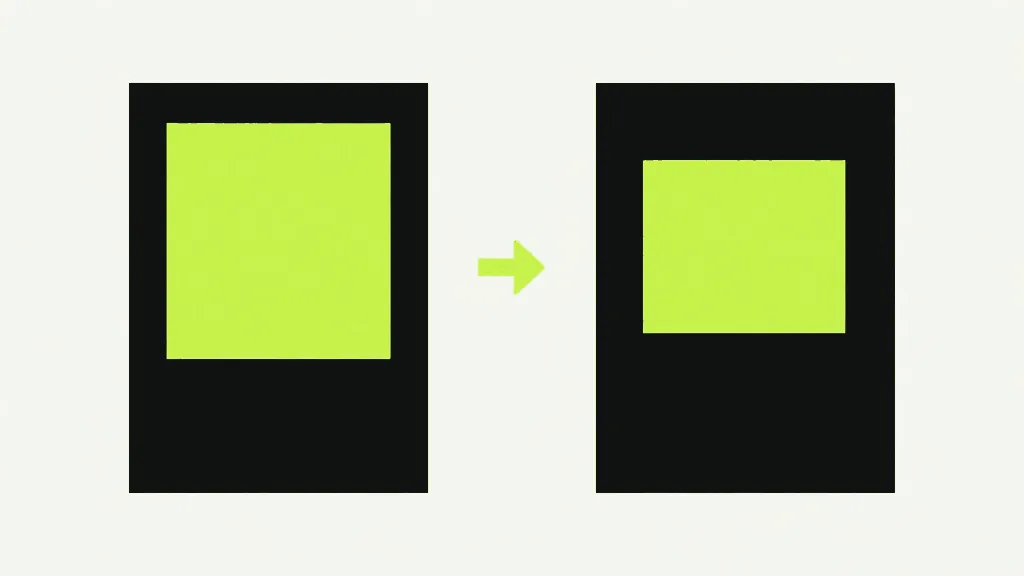
No, and that is the honest difference from Acrobat. Annotating does not rewrite or rasterise your page. What gets saved is a transparent image holding only your marks, stamped over the top. The page beneath is never redrawn, so its text stays selectable and searchable — Ctrl+F still finds the clause you just highlighted. Only your added marks are pixels.
The proof is stronger than it sounds, and it cuts both ways. Stamp a fully opaque overlay across an entire page — visually burying the document — and the original text is still sitting in the file, still extractable by anyone who opens it in a reader. Covering something is not deleting it. So a box drawn over a phone number hides it from the eye and leaves it in the bytes: annotating is not redaction, in exactly the way a black box is not redaction. If something must be genuinely gone, use Redact PDF, which removes the marked content for real.
There is one more consequence of the marks being an image: they flatten when you save, so you cannot re-edit them afterwards. Reopen the saved file and you get a page with a picture of your highlighter on it, not a highlight you can drag or recolour. Undo and redo exist while you work and stop existing the moment you download, which is why the habit is to keep the clean original and mark a fresh copy if the notes need revising.
How do I convert a scanned PDF to editable in Acrobat?
A scanned PDF is a stack of photographs, so there is no text to edit — Acrobat and every other tool have to run OCR first to turn the pixels into recognised words. Only then can the text be selected, searched or, in paid Acrobat, edited. Without that step, clicking the page does nothing because the file believes it holds no text at all.
You can do the recognition step free and locally with OCR PDF, which lays an invisible text layer over each scanned page so the document becomes selectable and searchable while looking identical. That makes a scan findable and copyable; rewriting the printed words themselves is still the paid-Acrobat job, on any file. For the fuller picture of why in-place text editing is so hard everywhere, see why editing a PDF is awkward.