How to save a Word document as a PDF on Mac — with Word, or without it
To save a Word document as a PDF on a Mac, open it in Word, choose File, then Save As, set File Format to PDF and click Export. With no Word installed, open Word to PDF in Safari, pick Letter, and download a PDF with real text.
If Word is installed on your Mac, Word itself is the best way to make the PDF, because it keeps the layout exactly. This guide covers that route, the Print dialog route every Mac app shares, and the one for a Mac with no Word on it. It also lists what the browser route changes in your document, because we tested it and it changes more than most guides admit.
How do I save a Word document as a PDF on a Mac?
In Word for Mac, choose File, then Save As, open the File Format menu and select PDF, then click Export. That is the route Microsoft Support documents. Word lays the PDF out from its own page, so your fonts, colours, headers and page breaks should stay as you set them. We have not tested it on a Mac for this guide.
How do I convert a docx file to a PDF on my Mac without Word?
Open Word to PDF in Safari or Chrome, choose the .docx, pick Letter, and click Convert to PDF. The PDF downloads with the same name and real, selectable text. It is free, needs no Office licence, and the document is read and rebuilt inside the browser tab, with nothing uploaded.
Open the tool
Go to Word to PDF in Safari, Chrome or any other browser on the Mac. There is nothing to install and no account.
Choose the .docx
Drag it from Finder onto the drop area, or click to pick it. Only .docx is accepted; an old .doc is refused with a note to resave it as .docx first.
Pick Letter
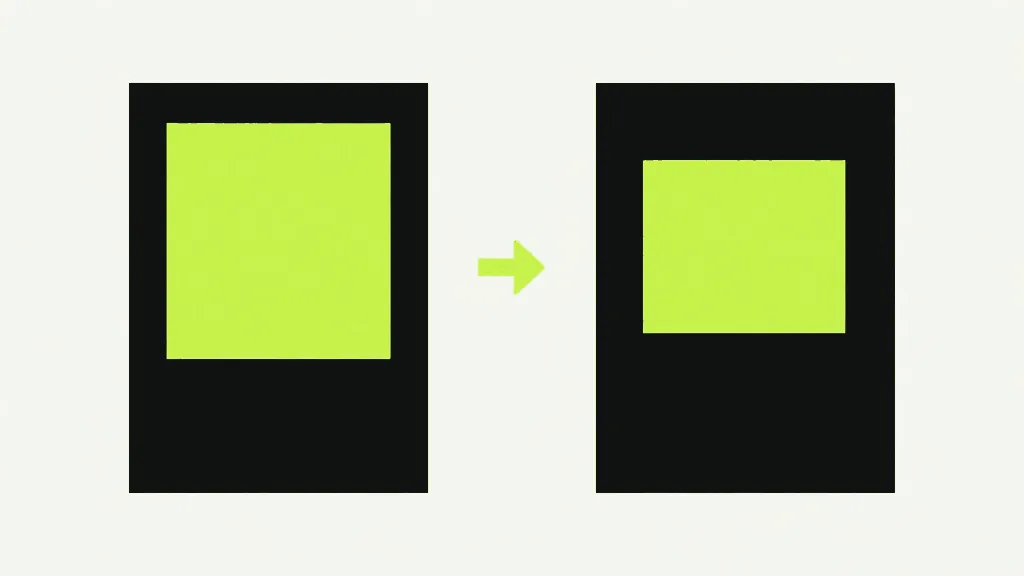
The page size starts on A4. If the PDF is going to be printed or read in the US, click Letter before converting, or it comes out on the taller, narrower A4 page.
Convert and save
Click Convert to PDF. The file downloads as yourdocument.pdf, and the original .docx is left as it was.
Will the PDF look the same as my Word document?
Not exactly. The tool rebuilds the layout from the document's content instead of copying Word's page, and every line is set in the tool's own font. We converted a test .docx and read the PDF back with a different library from the one that wrote it. A centred line in red 14 point Times New Roman came out as black, left-aligned 11 point Noto Sans.
- Kept: the words as real, searchable text, headings (a Heading 1 became 24 point bold), bold and italic, lists, images and simple tables.
- Moved: footnotes go to the end of the document as numbered notes, with a bracketed number where each one was referenced.
- Dropped: your fonts, text colour, alignment, headers, footers and manual page breaks. A forced page break in the test file did not start a new page.
- Not covered: Chinese, Japanese and Korean text, which the bundled font does not include.
Body text always comes out in Noto Sans at 11 point, whatever font you wrote it in. That is the trade for converting with no Word and no upload: the content is faithful, the typesetting is not. If the exact look matters, a résumé or a designed letter, use Word, Pages or the Print dialog instead.
Can I save a Word document as a PDF from the Print dialog?
Yes, from any app that can open the file. Apple Support describes it: choose File, then Print, click the PDF button or pop-up menu, and select Save as PDF. The PDF is made from the app's own layout, so it looks like what you see on screen. Pages and TextEdit can open many .docx files, so this works on a Mac without Word too, though how faithfully each one opens a .docx is outside what we tested.
Why is my Word document not exporting as a PDF?
In our tool, it is usually the file type. A .pages file is turned away with "Choose a Word .docx document.", because the tool reads Word's format only, and Pages has its own export. An old .doc file gets a message to resave it as .docx. When Word itself refuses, one Apple Community thread traces it to a macOS update; the Print dialog is the fallback.
Once you have the PDF, the plain Word to PDF guide covers the tool on any computer, and PDF vs Word explains why the two formats lay text out so differently. To go back the other way on a Mac, see converting a PDF to Word on Mac.